In short
Quartz is consistent, hard-wearing and easy to keep clean. Sintered porcelain comes in large slabs with convincing marble, limestone and travertine looks. Choose by how you cook and how much evenness you want, see the real slab in daylight and settle the seams before anything is cut.
The island is where the surface is seen
An island is where a kitchen meets the rest of the home. Guests lean on it, children do homework at it, and the cook works along its length. The surface you choose is seen and touched more than any other in the room, so it deserves more care than a colour swatch allows.
The surfaces we build with are quartz and sintered porcelain. Both can carry the look of marble, limestone or travertine, so you can have the veining or the warm, quiet tone you want, in a material that is made for a working kitchen. Each has a different character and a different set of habits it asks of you. Neither is the best. The right one is the one that fits how you actually live.
Quartz: consistent and easy to live with
Engineered quartz is made from crushed quartz bound with resin. It is consistent from slab to slab, non-porous and low maintenance, and it needs no sealing. The pattern is controlled, so it works best in clean, modern rooms where evenness is the point.
Quartz comes in plain colours and in veined looks that follow marble. The resin can be damaged by very high heat, so hot pans need a trivet. It is a good choice for a family island that is used every day, where a surface that is easy to wipe down matters more than a changing patina.
Sintered porcelain: large slabs and convincing looks
Sintered porcelain, sometimes called porcelain slab, is made by fusing minerals under heat and pressure. It comes in large slabs, so an island or a back wall can run with few joints, and it is made in careful looks of marble, limestone and travertine, in matt and satin finishes.
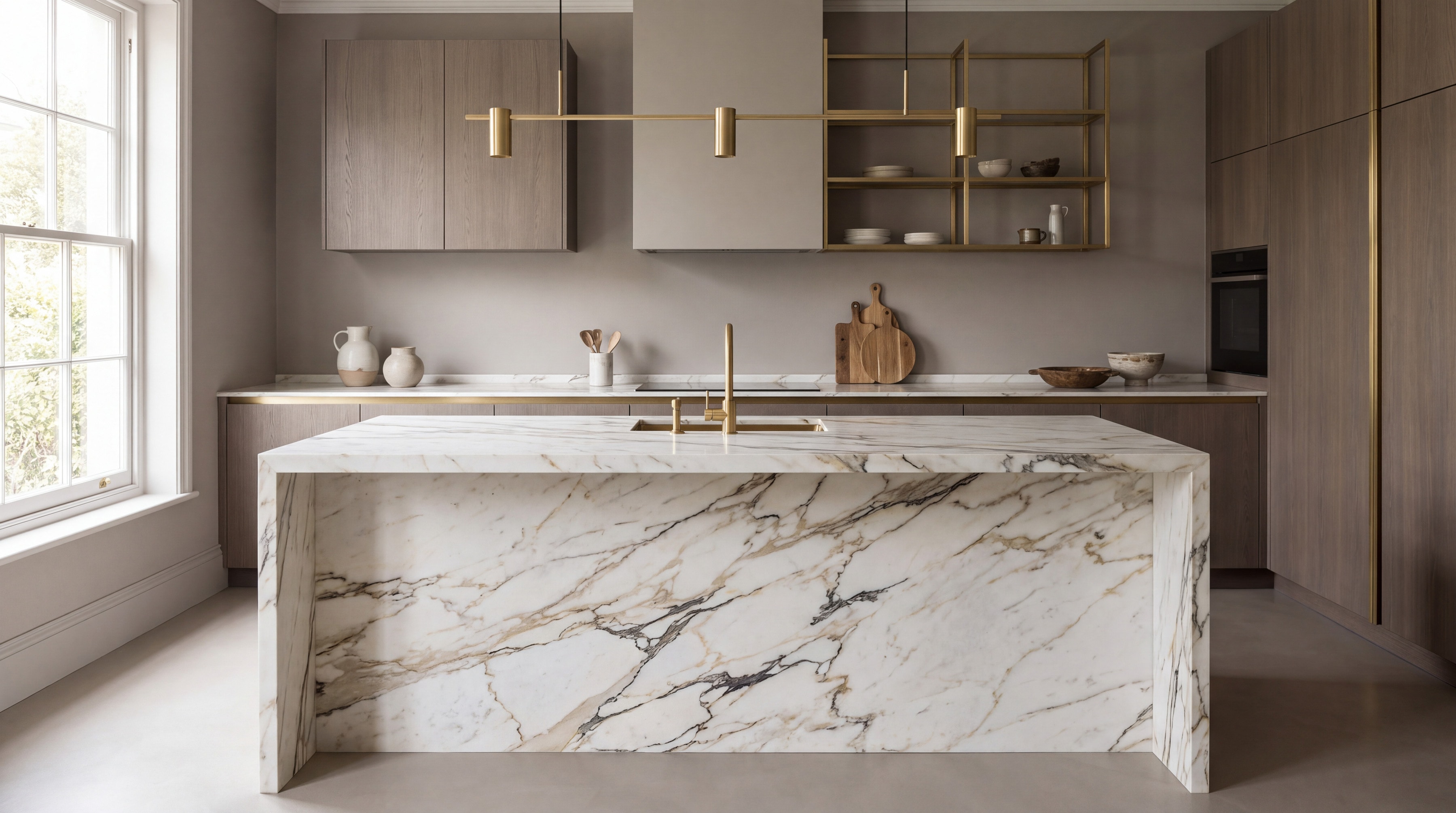
Edges need careful detailing, and a hard knock to a corner can chip any slab. A thin top with a mitred or waterfall edge is the most dramatic way to use porcelain, and also the most demanding to cut and fit, so we plan it carefully with you before anything is ordered.
Marble, limestone and travertine looks
A marble look has veining, from soft grey on white to a bold dark vein. A limestone look is quiet, even and warm. A travertine look has a soft, fossil-like pattern in sand tones. These are looks, and we say so: the material underneath is quartz or porcelain.
That is the trade you are making. You choose the look first, and you get a surface that is made for daily use and stays consistent. What you do not get is a surface that changes and carries the marks of years of use. For many households that is exactly the point. Be honest about which kind of person you are.
Matt, satin or polished? Finish, edge and seams
A polished finish is glossy and shows depth in the veining. A matt finish is calm and hides fingerprints and small marks. A satin finish sits between the two. Sample all three in the look you like. The same slab can look like three different materials.
Thickness and edge change the character of an island more than most people expect. A mitred edge folds the surface so a thin top reads as a solid block. A waterfall end carries the same slab down the side to the floor, and the veining continues around the corner. It is the most dramatic way to use a slab, and also the most demanding, because it needs precise cutting and enough slab to match the pattern.
Ask where the seams will fall before anything is cut. A seam is not a flaw, but it should sit where it makes sense, away from the sink and hob cut-outs, which are the weakest points of any top. A slab is also heavy, so the island base and the floor must be planned to carry it, and any seating overhang needs proper support.
If the island is large, ask how the veining will meet at the joins. Slabs from the same batch can be laid in sequence so the pattern carries across the join. That depends on the slabs being kept in order, so it has to be planned with the supplier before the slabs are bought and not afterwards.
Choose the slab in person
Photographs and small samples tell only part of the story. Go to see the actual slab, ideally with the layout of the island drawn out beside it, so the veining can be placed where you want it.
Look at the surface in daylight and again in the evening, under the lights you will have in the room. Warm light changes the colour of many surfaces. Ask to see it wet, and ask what the supplier would do about a stain or a chip. Then touch it. Your hand will tell you things your eyes cannot.

